Abhijith Jayakumar
Quantum ''and'' Computing
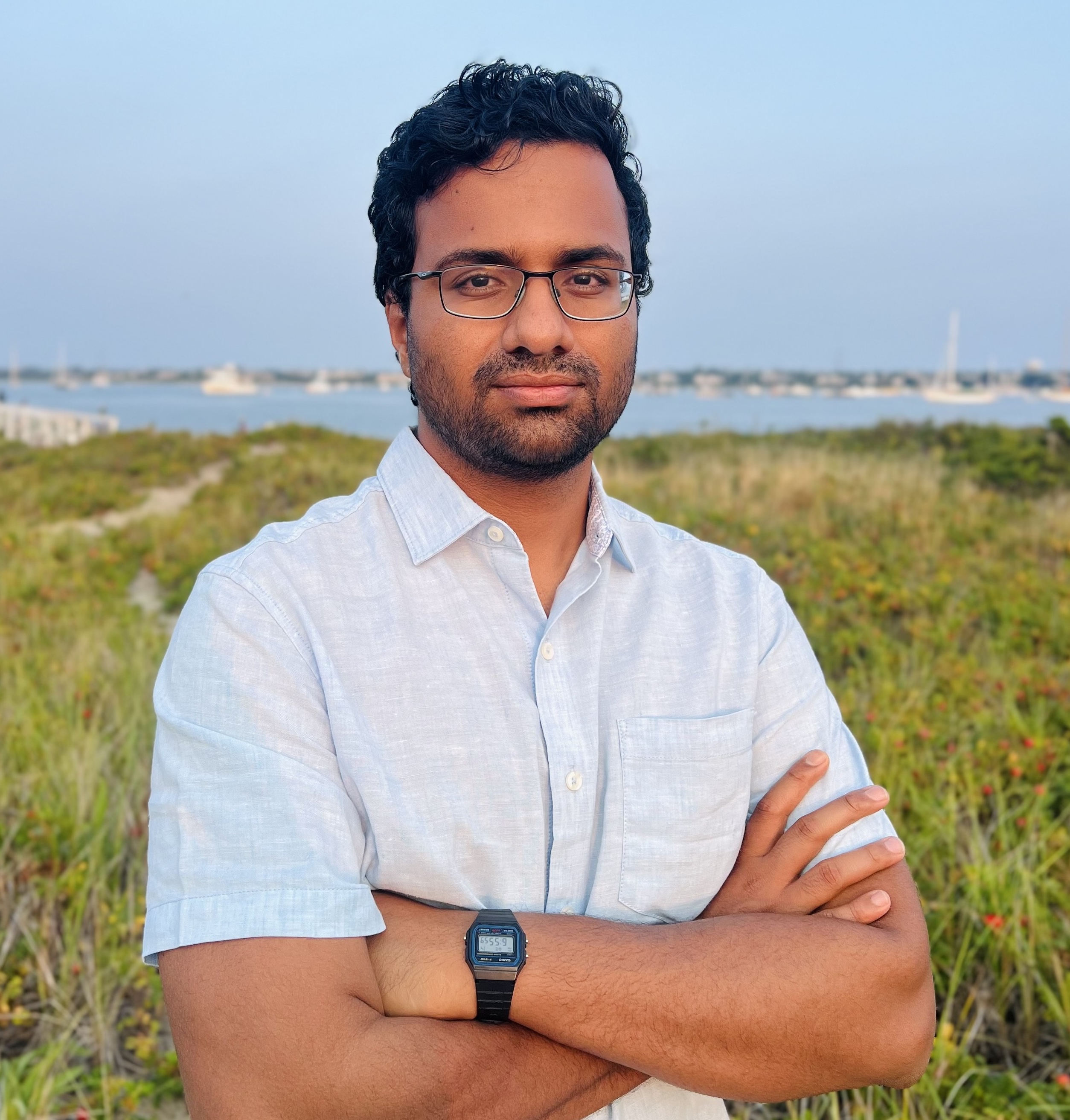
I am a Scientist at the Theoretical Division of Los Alamos National Lab, working on problems at the intersection of Quantum Information, Machine Learning, and Statistical Physics. I was previously a CNLS Postdoctoral Fellow in the same division mentored by Dr. Andrey Lokhov and Dr. Marc Vuffray. Before Los Alamos, I did my Ph.D. focusing on quantum algorithms and M.Tech in computational science from the Indian Institute of Science, working under Prof. Apoorva Patel.

abhijithj@lanl.gov
research
Select a dot to read the paper.
Browse all 21 papers
- Quantum algorithm implementations for beginners
- Spatial search with multiple targets via flip-flop quantum walk
- Improving query complexity of quantum spatial search in two dimensions (arXiv)
- Potential applications of quantum computing at Los Alamos (arXiv)
- Limitations of fault-tolerant quantum linear system solvers for power flow
- Universal framework for simultaneous tomography of states and SPAM noise
- Learning response functions of analog quantum computers (arXiv)
- Reliable quantum kernel classification using fewer circuit evaluations (arXiv)
- Learning energy-based representations of quantum many-body states
- Efficient learning of lattice gauge theories with fermions
- Discrete distributions are learnable from metastable samples
- Learning of discrete graphical models with neural networks
- Finite sample bounds for learning with score matching
- Optimization proxies from limited labelled data
- Quantum Hamiltonian Analysis Toolkit (arXiv)
- Conditions for quantum advantage in AC power flow (arXiv)
- Autoregressive graphical models for ground states of stoquastic Hamiltonians
- Learning of statistical field theories (arXiv)
- Discrete diffusion with sample-efficient estimators for conditionals (arXiv)
- Computationally sufficient statistics for Ising models (arXiv)
- Operator score matching for learning quantum Hamiltonians (arXiv)
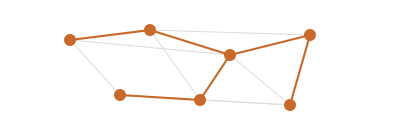
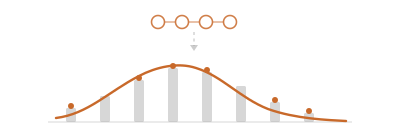
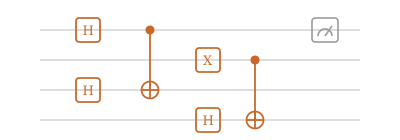
Everything that I do can be broadly classified as algorithms research heavily influenced by ideas from Physics. However, very little of it cleanly falls into a single field. This is the most enjoyable and the least pragmatic approach to designing a career in research. This diagram represents each of my papers as a dot, placed by how much it leans on each field. My work falls into a few long-running threads, which are explained below. Hopefully you, the reader, will see the unity between them as clearly as I do.
selected publications
- Efficient learning of lattice gauge theories with fermionsPhys. Rev. D, Jun 2026
- Discrete distributions are learnable from metastable samplesNature Communications, 2026
- Finite Sample Bounds for Learning with Score MatchingIn The Thirty Ninth Annual Conference on Learning Theory , 2026
- Limitations of Fault-Tolerant Quantum Linear System Solvers for Quantum Power FlowIEEE Transactions on Power Systems, 2025
- Universal framework for simultaneous tomography of quantum states and SPAM noiseQuantum, Jul 2024
- Quantum algorithm implementations for beginnersACM Transactions on Quantum Computing, 2022
- Learning of discrete graphical models with neural networksAdvances in Neural Information Processing Systems, 2020
- Spatial search on graphs with multiple targets using flip-flop quantum walkQuantum Information and Computation 18, 1295-1331 (2018), 2018